|
|
|||
The Beauty
of Squash
|
|||
|
|
|||
|
Squash is
undoubtedly a very beautiful game. A game that is full of action and
excitement. At the same time, full of elegance and clever thinking. It
provides a player the opportunity to express qualities of speed and power, as
well as extreme sensitivity and control. This is a true game of body and
mind. The head is essential in keeping calm, controlling the shots and
movement, making quick accurate decisions, understanding the opponent, and
making optimal use of a player’s resources. However, without the physique,
the ability to move fast and accurately, stretch down for the ball, and last
for as long as it takes, winning against a tough opponent would be
impossible. A player without the necessary physical conditioning, would not
have the opportunity to move onto the ball and play the shot as he would like
to. In other words, the mind must control the body, but the body must be
capable of executing orders. |
|||
|
It is
incredible how squash is so much like a game of chess. Controlling the
centre, laying out the foundations for attaining good defence when required,
planning ahead for the attack, and using the various weapons to keep the adversary tied down. Watching
capable players illustrates how they are determined to stay on the T and try
to manoeuvre each other until one player may dominate and go for the kill.
The amazing thing about squash though, is that it is all that and more. Not only
do players have so many shots at their disposal, but also there are also many
dimensions to the game. Players can vary the speed of their shots, use the
sidewalls to create angles, as well as send the ball high up, or down just
above the tin. These added dimensions enhance creative tactical play. Tactics
are also influenced by the players’ court coverage abilities. |
|||
|
|
|||
|
Squash is
also a very tough game, both physically and mentally. Rallies are often long
and hard. At the same time a player must be capable of making sound decisions
and maintain his patience. Experience is extremely important in attaining the
right balance. It is also this element of toughness, which makes the game so
attractive to play. No wonder, so many people prefer participating rather
than watching. Most players are also very competitive, and although they may
play primarily to enjoying themselves, they always prefer to play at their
best and win. |
|||
|
My passion
for this game has driven me to play and train hard for the past 31 years, and
try to help others improve their game. Apart from the satisfaction attained
from coaching beginners and working with some of the world’s top players, I
had devised the Shot Squash 2000
training system. Having done that, my aim was to give further advise to
interested players. This e-book is an attempt to explain and illustrate every
possible detail to players and coaches. It also tries to offer solutions for
errors of every type. Although this book has much detailed information, which
a recreational player may find inapplicable, it hopefully provides enjoyable
reading and viewing. Besides, a recreational player may decide to follow
whichever particular advise he wishes to. He may not be very interested in
making great sacrifices to become the fittest squash player, but may like to
work hard at improving his racket skills, deception
or tactics. Another player may be very interested in the weight training, and
would prefer having a more powerful game. So, whichever
type of player you are, beginner or professional, you will find some
interesting information, which will improve your game. Coaches will also find
the material of interest and help them find different means to solving their
pupils’ problems. For now, sit back and enjoy! |
|||
THE RACKET - OLD AND NEW
|
|||
|
|
|||
|
|
|||
|
a very important piece of equipment. All the
effort made by a player during the execution of a shot are concentrated on,
and serve the purpose, of moving the racket with a certain degree of control
at a particular speed. Therefore, the racket has to be manageable and
“comfortable”. It is also the racket (not forgetting the strings!), which
makes contact with the ball on impact to give it speed and direction, which
are both very important in allowing the player to send the ball where he/she
wants to. |
|||
|
|
|||
|
The racket being manageable
and “ comfortable ” to use means that it must not be too heavy as to impede
quick effortless movement, especially during the back swing or when using the
wrist in particular situations. This will be explained later in the book when
other arguments such as technique, deception, and defence are discussed. It
must also be well balanced and not be excessively “top” or “bottom heavy” in
order to give the player enough “feel” in determining and sensing the racket’s
position at all times. |
|||
|
|
|||
|
A good racket
will make the strings work well by keeping them accurately in place while
allowing them to absorb the ball’s impact and rebound with precision. Another
very important factor is to absorb the vibrations (if produced on impact)
without rendering the ball “insignificant”. This means that the player still
feels the impact of the ball in order to apply sensitivity to his shots. |
|||
|
|
|||
|
In other
words, a racket must not be so powerful, elastic, and totally shock absorbing
(spongy) as to transmit to the player the same sensation on impact regardless
of the speed of the oncoming ball or that of the racket swing. |
|||
|
|
|||
|
The ideal
area of impact or sweet spot on the racket string surface must not be too
small or too large. The disadvantages due to the former are quit obvious
while that of the latter rather less so. If the sweet spot is too big, this
will imply that there exists a “false” sweet spot. I refer to it as false,
because less sensitive players would not distinguish where impact took place.
A sweet spot which is too big may give the player a false impression that he
did hit the ball well even when in reality, impact was well off-centre.
Impact may be regularly off-centre due to bad technique that is constantly
ignored, hence, creating further problems or lack of progress. |
|||
|
|
|||
|
With this in
mind, we should remember that not long ago, wooden rackets with a reduced
head size were the norm. These rackets were extremely difficult to use when
compared to modern oversize carbon/graphite/ or kevlar rackets. Nonetheless,
there have been great, admirable players who used the wooden frames with
astonishing skills. I would advise players who haven’t seen these objects in circulation to try
to get their hands on old videos to see the skills and precision of players
like Qamar Zaman or the power of Hidy Jahan’s shots. |
|||
|
|
|||
|
|
|||
|
|
|||
|
|
|||
|
The rackets
we use today have made life very different for players. Control, and
especially power, has been greatly enhanced. Even a player on the receiving
end of powerful accurate shots of an opponent -thanks to the modern racket-
finds assistance in his efforts to defend. For example, the defender despite
being fully stretched, finds enough “push” from the racket to send the ball
to the back of the court, and get himself out of trouble. |
|||
|
|
|||
|
Theoretically,
a lighter racket favours deceptive play too. It has become easier to hold a
shot till the last moment, and also easier to use the wrist. This will be
referred to later. |
|||
|
|
|||
|
It would be
safe to say that hitting the ball while not under pressure has become easier,
and that players find themselves doing things differently, causing the game
to change together with the racket’s evolution. Generally speaking, the pace
of play and frequency of shots have increased, making the game even faster
than it used to be. |
|||
|
|
|||
|
At
professional level, the tin has also been lowered by 5cms. This has favoured
more shot making and attacking play. Players have been provided an added
incentive to play short and fine-tune such attacking shots. At the same time,
they have had to prepare themselves, fitness wise, even better in order to
move faster and retrieve their opponents more difficult shots. Generally
speaking, the rallies have become slightly shorter but more intense. |
|||
|
|
|||
|
Even though
the tin height has been lowered only for P.S.A players, others who play on a
regular tin have been influenced by the changes. Watching the top pro's
attacking more has convinced others to try adopting a similar stile of play.
An increased pace of play with more volley drops, and volley boasts has
become more common. |
|||
|
|
|||
|
|
|||
|
|
|||
|
|
|||
|
|
|||
|
|
|||
|
Which is the
best racket for me? Probably a very frequent question in the minds of players
of all levels. Some less serious players consider aesthetics as a priority
while professionals may evaluate the merits of a sponsor’s contract. The vast
majority of squash players, though, look for different qualities. |
|||
|
|
|||
|
Having
discussed the importance of this most valuable instrument, our choice must
consider all that has been mentioned above. A good racket must provide
control and power, be light enough for manageability, but not too light to
the extent of not giving enough feedback to the player’s hand, regarding the
racket head’s speed and position. If a racket is too light and lacks
material, it may not be solid enough to absorb the impact, hence, making the
ball seem heavier and difficult to manage. |
|||
|
|
|||
|
In other
words, players must be wise to consider all aspects. Players differ in
structure, strength, and sensitivity. What may feel right for one may not be
so for another. So, there is no “best racket in the world”. A sensible choice
must be made to select the racket most adept to help the player accomplish
his goal. Brand names are important, though to some extent. A company, which
constantly invests in research to find the best materials, frame structures,
and innovative ideas, should not be overlooked. A racket producer which works
harder than the others to maintain a leading edge, is more likely to
guarantee it's players, top quality rackets. |
|||
|
|
|||
|
One common
factor must exist however, and that is strength or resistance against
breakage. I would avoid all rackets that break easily or brands that have a
“fragile” reputation. Squash is fast and there are too many walls to spend
money on things that break easily. |
|||
|
|
|||
|
Returning to
the point about how players are physically different, and vary in playing
style, rackets also, come in different materials, weights, shapes and sizes.
The variations found between rackets offer players with different needs, the
appropriate solution. The frame shape is one of the most important
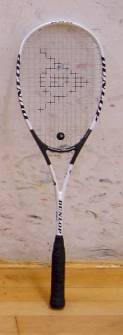
characteristics of a squash racket, and shall be considered first. Racket
head shapes could be grouped into four categories. |
|||
|
|
|||
|
|
|||
|
-
Oversize wide and narrow |
|||
|
-
Drop shape (or long string) |
|||
|
-
Drop shape with a flat top |
|||
|
-
Mid-size |
|||
|
|
|||
|
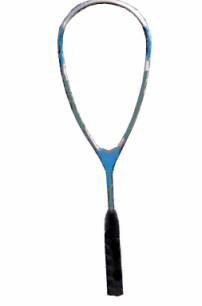
The oversize racket
beginners,
especially if it is also light, but may create a false sense of security.
With this racket, beginners would miss hit the ball less frequently and
produce more powerful shots. This type of racket would also be suitable for
better players who move the wrist excessively during the back swing and the
beginning stages of the swing itself. The only real
disadvantage being the excessive sweet spot area, which makes it difficult
for players to individuate the exact correct spot where contact should be
made with the ball for maximum precision. |
|
|
|
|
|
|||
|
I would also
advise very tall, big players not to use this type of racket. It is also
important to note that as this type of racket has a large frame, only
recently has it been possible to produce a lightweight version, thanks to the
use of modern materials such as titanium. |
|||
|
|
|||
|
|
|||
|
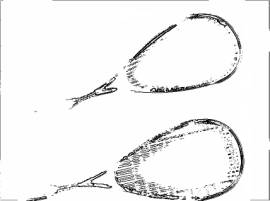
The oversize narrow racket (top) the oversize
racket (bottom), but obviously has a narrower sweet spot. Hence, this racket
is not as friendly to beginners, but will force them to concentrate more on
the accuracy of their swing in order to make good contact with the ball. The more
rigid frame is suitable for advanced players. This racket provides accuracy
plus the benefits of the long string for powerful shots. |
|
|
|
|
|
|||
|
|
|||
|
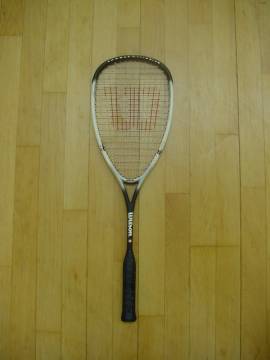
The drop shaped racket compromise. The head is
big enough to produce powerful shots, but also of acceptable size to provide
control. It is important for the player using this type of racket, to note
that the sweet spot is a little off-centre towards the top end. |
|||
|
|
|||
|
|
|||
|
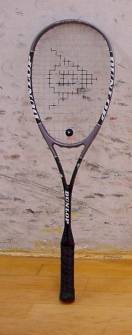
The drop shaped head with a flat top, racket. That is, most of its weight is tipped
towards the top end. As this racket has a flat top, it is also very wide at
the top of the head and becomes very narrow moving towards the racket throat.
This means that the
sweet spot is even further towards the tip of the racket. I would highly
recommend this racket for a very tall, heavily built player. Very tall
players find it hard to go down on their legs. Heavily built ones, even more.
Reaching down with their arm to hit a low-lying ball is made easier with this
type of racket, which has its sweet spot very close to the tip. It is also
true that when hitting a ball that is close to the sidewall, a point of
impact close to the top of the frame is ideal with this racket shape. |
|
|
|
|
|
|||
|
The sweet
spot close to the top end of the racket provides another advantage for a long
armed player. The distance between the player’s hand and the point of impact
is greater compared to other rackets and consequently more proportional to
that between the player’s hand and his elbow. Therefore, the player has
greater leverage, which could be used to accelerate the racket head and hit
the ball very hard when required. This greater leverage together with the
heavier racket head would probably be uncomfortable for an average sized player
and render the racket uncontrollable. Of course, a few more grams added to
the tip will not disturb a heavily built player. |
|||
|
|
|||
|
(I would add
here that any player, regardless of build, who is not interested enough to
get his technique corrected and continues to have a slow swing, would be able
to hit the ball harder with this top heavy racket). |
|||
|
|
|||
|
|
|||
|
The mid-size racket, or squarish shape, is the ideal racket for top
players or those who would like to play with good technique and are constantly
searching for accuracy. These rackets, offer precise feedback to the
sensitive player. The exact quality and point of impact can be felt. Hence, a
player will adjust his timing, technique and precision. He/she will be able
to get the most out of the racket and enhance his/her abilities and
performance. This racket may not be the easiest to use, but with some
patience and practise, would provide extreme accuracy and power. |
|
|
|
|
|
|||
|
|
|||
|
|
|||
|
THE
RACKET THROAT AND SHAFT |
|||
|
|
|||
|
about the racket head, but there are other important areas of the
racket frame. The racket throat, for example, may vary significantly. Some
rackets are very thick in this area, while others are thin. The same applies
for the shaft. |
|||
|
|
|||
|
A thick
racket throat should make the racket head distort less and pass less
vibration to the player’s hand when the ball isn’t hit well. This would give
the player more control. It is important that a massive frame should have an
aerodynamic profile and be constructed of lightweight material; otherwise the
racket would be unmanageable. |
|||
|
|
|||
|
The racket
shaft could be constructed on similar lines, to enhance speed, power, and
control. |
|||
|
If a player
chooses a racket with a very thin shaft, he must make sure that it is not too
flexible, as this will undoubtedly give excellent ball speed, but not
directional accuracy. |
|||
|
|
|||
|
In
conclusion, it is very important to read the racket tests published in squash
magazines and listen to your coach’s advise. Remember also to read the
manufacturer’s notes on technical characteristics, construction, and use of
material, in their brochures and on the pamphlet attached to the rackets. |
|||
|
|
|||
|
MATERIALS USED FOR RACKET FRAM CONSTRUCTION
AND HOW THEY VARY |
|||
|
|
|||
|
such as graphite, carbon fibre, kevlar, or titanium. Some
cheap rackets are also made of aluminium. The aluminium rackets had the
advantage of being very economical for those who wanted to try the game and
spend the minimal amount of money. These rackets are however, relatively
heavy and deform easily. Today, some carbon fibre rackets cost very little
and provide the same price advantage. These rackets are undoubtedly of better
quality, lighter and last longer. |
|||
|
|
|||
|
Graphite
rackets are more robust, and had been introduced after the carbon fibre ones.
In fact, both materials are used together, but nowadays less so. Graphite
rackets are generally more rigid. Kevlar is an even tougher material. Strong
materials, which are also shock, absorbing, permit racket constructors to
make very light rackets, which could take all the punishment on a squash
court. The latest material now used is titanium, which is even lighter. The
most recent titanium models are a joy to play with. Very powerful accurate
shots are made much easier, while delicate shots are even more controllable. |
|||
|
|
|||
|
The use of
tough, resistant materials is vital. Shots that are very close to the
sidewall and deep in the corners must be hit with confidence. A fragile
racket would probably compromise the player’s concentration if he has to
worry too much about not harming his racket. |
|||
|
|
|||
|
|
|||
|
A WORD ON
STRINGS |
|||
|
|
|||
|
detail, some understanding of a few general concepts is
important. A player must be able to distinguish between degrees of string
tension, such as tight, very tight, loose, and very loose. It is also
important to know that looser strings push the ball faster while tighter
strings generally provide more control. Each player has to experiment with
attention and sensitivity to establish what works best for him or her. |
|||
|
|
|||
|
Strings also
come in different shapes and sizes. Apart from the natural gut strings, which
are hardly used, any more, there is a huge variety of synthetics from the
most complex and thin, to the most simple and thick calibres. Thick
strings generally last longer while the opposite goes for thin ones. Thinner
strings usually give more control, too. The surface
of the material used is what makes contact with the ball. Most players avoid
strings which are too smooth. They provide less grip on the ball and
consequently less control, especially when using a slice action. These
factors are to be considered and tried in order to make a good choice. |
|||
|
|
|||
|
String
flexibility is important to identify. Strings that are too rigid don’t
provide much power and are not easy to adapt to. However, flexible strings
provide a nice big sweet spot and
lots of power. A note of attention though. It is important to adopt a
slightly higher string tension when using the flexible types, as they will
stretch. If they are ideally set at the beginning, they will become too loose
after some hours of play. |
|||
|
|
|||