|
|
||||||||
|
believing |
||||||||
|
|
||||||||
|
|
|
|
As mentioned above, squash is one of the very few sports where
the player does not see his opponent for most of the time. Even when the
opposition is in front, and standing near the “T”, the striker’s
concentration is on the ball or may be turned towards the sidewall or back
corner. The other player on the “T” may be perfectly centred, a step forward,
behind, to the left, or right. A player’s choice of shot is greatly
determined by these factors. |
|||||
|
|
|
|
|
|||||
|
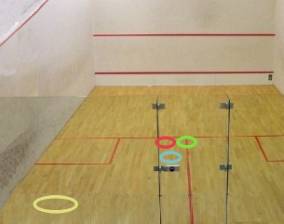
When the player is in the
area indicated by the yellow circle and is in a defensive position, the
opponent is typically in one of the 3 positions shown near the centre of the
court. The green circle is ideal for the opponent but neutral. The red circle
is aggressive and favours volleying very early down the left wall, and easy
access to the front left corner. The blue circle favours volleying (but not
very early) down the left wall, and easy access to the back left corner. |
|
|
|
|||||
|
|
||||||||
|
|
||||||||
|
make the right choice? |
||||||||
|
|
||||||||
|
Again, the time factor is
critical. Let us consider this case. A player executes a fairly accurate shot
but as he turns towards the ball, (little time elapsed) finds his opponent
almost ready. This clearly means that the opponent “read” the shot, or had a
“predisposition” to move for that shot. |
||||||||
|
|
||||||||
|
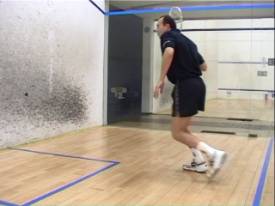
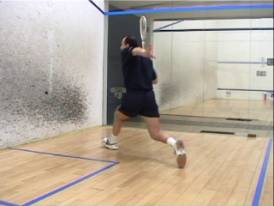
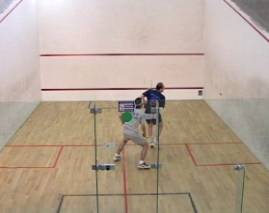
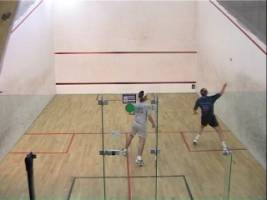
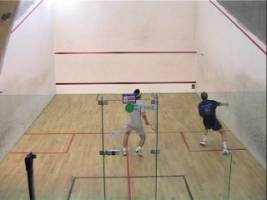
This
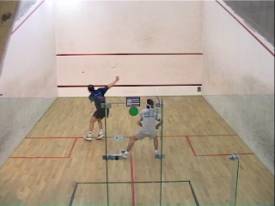
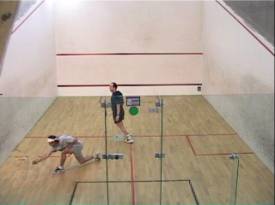
is better explained visually with the help of the two photos below. |
||||||||
|
|
|
|
|
|||||
|
|
|
|
|
|||||
|
|
||||||||
|
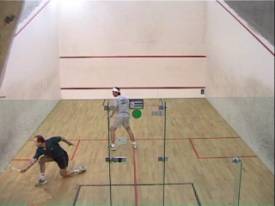
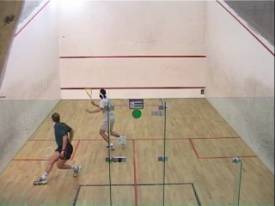
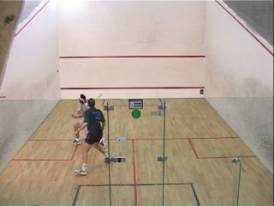
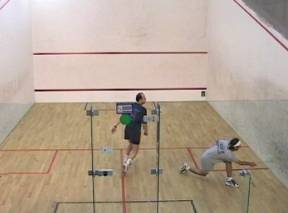
This can be seen in motion.
The opponent is standing fractionally to the left and leaning towards the
sidewall. He is getting himself ready to intercept the player’s shot down the
wall. The player hits the ball and as he finishes his follow-through and
takes the first step towards the T, sees the opponent almost ready to hit the
ball. He is therefore, caught out of position. |
||||||||
|
|
||||||||
|
Below, are a number of
solutions that could be adopted if the opponent persistently positions
himself closer to the backhand wall to take the ball early. |
||||||||
|
|
||||||||
|
The player in the back corner
may use a lot of wrist action to play a simple cross-court. It is important
to get enough width on this shot in case the opponent doesn't move off the T
early. A weak cross-court presented to the opponent would hardly solve
anything, but when played wide, finds the gap. In case the player doubts
getting enough angle onto the shot, a high defensive trajectory down the wall
would be ideal. |
||||||||
|
|
||||||||
|
In these last two examples,
the player can turn a defensive situation into an attacking one. Practising
the sidewall boast when stretched would allow him to catch the rival
wrong-footed.
|
||||||||
|
|
||||||||
|
As a result of such
successful counterattacks, the rival rethinks, and centres himself on the T.
At this point the player’s straight drives will once again penetrate to the
back. |
||||||||
|
|
||||||||
|
|
||||||||
|
|
||||||||
|
Our second point of
discussion regards a situation where, the player is at the unsighted. The opponent
is hanging back and slightly to the right. As soon as the striker hits the
ball and turns his shoulders to follow the ball visually, he immediately sees
the opponent close to the ball. He therefore, realises that the adversary was
positioned relatively close to the back right corner. Had the retriever
started moving from a regular position on the T, the striker would have seen
him take the last two steps. |
||||||||
|
|
||||||||
|
Hence, it is the time
elapsed and the consequent position of the adversary which inform the striker. |
||||||||
|
|
||||||||
|
|
|
|
|
|||||
|
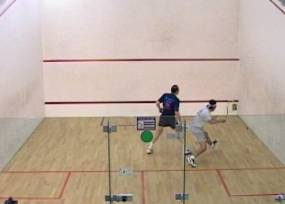
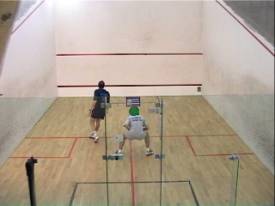
If you see your opponent in
this position as you turn around after playing the cross-court, indications
are he started off from an advanced position on the T. |
|
|
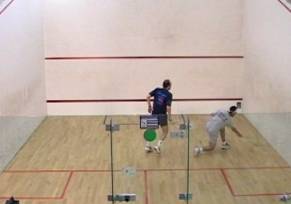
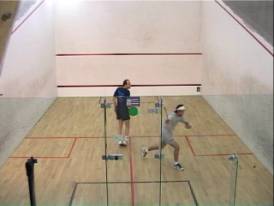
If however you see this image,
it is most probable that he was hanging back and a little to the right side,
expecting the shot. |
|||||
|
|
||||||||
|
|
||||||||
|
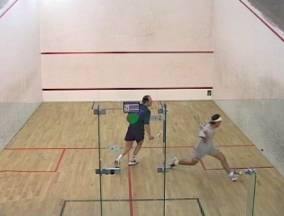
The video extracts
demonstrate how an opponent waiting for the cross-court causes a briefer time
interval between the two shots. |
||||||||
|
|
||||||||
|
Another alternative would be
to drive down the wall on the following occasion, and then cross-court. If
the opponent is instantly onto both shots, that would imply that he was
hanging back but equidistant to both back corners. On the other hand, if he
is beaten by the straight drive, that would confirm his predisposition for
the cross-court. |
||||||||
|
|
||||||||
|
Here, we have . The player realises that the
time gap between his exit and the opponent brushing past him or bumping into
his body, is too brief. He senses that the opponent was positioned a step
ahead of the “T”, ready to move forward.
|
||||||||
|
|
|
|
|
|||||
|
|
|
|
|
|||||
|
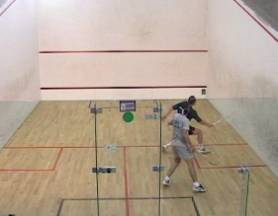
As soon as the player in the
dark shirt rises from his counter drop… |
|
|
.. he finds his opponent
already brushing past him and soon able to strike the ball. |
|||||
|
|
|
|
|
|||||
|
If the situation is repeated,
the player must take adequate measures against the opponent’s confirmed
tendency. He may draw in the opponent even more by delaying the shot,
simulating a drop, then lobbing high with the use of the wrist, |
||||||||
|
|
||||||||
|
The cross-court may also be
used in a different way. Often, during frontcourt exchanges, players do not
have sufficient time to return to the T. A player, who finds himself in the
front corner, with a tall player behind, may not feel comfortable to try the
lob. If his/her tall opponent manages to volley the lob, the player would be
on the run again. A tall opponent has lots of reach. When he is a step ahead
of the T, he could easily volley a drive or a cross-court. The best solution
would be a very wide cross-court. Watch how in this clip, the player in
front, with a flick of the wrist, sends the ball very wide onto the sidewall
and around his tall opponent who was eager to volley. |
||||||||
|
|
||||||||
|
Now we finally get to what
could be ions. When playing shots on
the volley. Most shots played on the volley are executed with the opponent
behind the striker. The latter must make the right choice, as there is no
point in making the extra effort to take the ball early when the resulting
shot is sent back to the opponent. Remember the concept regarding the time
interval between shots, which was explained above? (Click here if you
wish to go back) Simply, when the pace of the game is
raised, the player who produces the better shots will remain in control while
the other will feel rushed and under pressure. |
||||||||
|
|
||||||||
|
An analysis of a basic, but
very important situation will follow. The player has the chance to volley and
must decide between the shot down the wall and the cross-court. Remember that
from this position, he cannot see his opponent who is behind. |
||||||||
|
|
||||||||
|
Example 1. The opponent is
stretched and plays a fairly slow shot down the wall. |
||||||||
|
|
||||||||
|
The most effective choice
would be a straight volley drive. This choice is based on the logic that the
slow return made by the retriever translates into more time elapsed between
his shot and the player’s volley. The greater time interval should be
sufficient for the retriever to reach the T. |
||||||||
|
|
|
|
|
|||||
|
|
|
|
|
|||||
|
|
||||||||
|
By taking advantage of the
gap down the wall, the opponent is made to stop and start again all the way
to the back. (Note that some players are very slow to get up when stretched.
If your opponent belongs to this category, the volley cross-court should be a
better choice. If you do not know your opponent beforehand, observe his
movement carefully) |
||||||||
|
|
||||||||
|
|
||||||||
|
Example 2. ut still
manages to hit a hard drive down the wall. The hard drive is not tight, but
rather, within the player’s reach. |
||||||||
|
|
||||||||
|
In this case, The most
effective choice would be a cross-court volley. This choice is based on the
logic that the fast return made by the retriever translates into less time
elapsed between his shot and the player’s volley. The reduced time interval
is insufficient for the retriever to reach the T. By taking advantage of the
gap left open on the other side of the court, the player pins the opponent
into the other corner. |
||||||||
|
|
||||||||
|
|
|
|
|
|||||
|
||||||||
|
|
||||||||
|
Example 3. The opponent is
not stretched and plays a fairly slow shot down the wall. This situation may
arise when, for example, a tired opponent tries to slow the pace. |
||||||||
|
|
||||||||
|
In this case, the opponent is
equidistant to the two back corners. The player’s decision should be based on
the playing pattern he is trying to construct. That is, whether he wishes to
keep play on the forehand or backhand side.
He also has the choice to use a bit of deception, as the slow incoming
ball permits him time to do so. The player shapes up for the cross-court
volley, but still manages to hit straight into the gap. |
||||||||
|
|
||||||||
|
|
|
|
|
|||||
|
By placing his right foot well
behind the ball, the player in the dark shirt mimics the position for the
cross-court, before hitting hard down the wall. |
||||||||
|
|
||||||||
|
|
||||||||
|
Example 4. The opponent is not stretched and hits a hard drive
down the wall. The hard drive is not tight and within the player’s reach. The
opponent has been trying to increase the pace of the game by hitting hard,
moving fast around the court and trying to volley frequently. |
||||||||
|
|
||||||||
|
In this case, volleying down
the wall is the better choice. The opponent was not stretched and therefore,
easily moves out of the back corner with a lot of speed and momentum. The
cross court would allow him continuous, fluid movement. The volley drive
chosen here, would make him stop and change direction. This is harder work
for him and would help disrupt his rhythm. The concept is the same as in this example where two fast cross-court shots are played. |
||||||||
|
This choice of shot is valid
unless it conflicts with the player's original rally plan. For example, a
player may have decided to play to a certain pattern or continue to pressure
the opponent on a weaker side. |
||||||||
|
|
||||||||
|
|
||||||||
|
|
||||||||
|
|
||||||||
|
Example 5. The opponent is
stretched and plays a fairly slow cross-court. |
||||||||
|
|
||||||||
|
The slow cross-court is ideal
food for deception. The player should delay his shot, make the opponent go
through the effort of coming forward and covering the other side of the
court, and then play the cross-court volley. |
||||||||
|
|
||||||||
|
|
|
|
|
|||||
|
The violent
stopping-starting action makes the retriever slow in changing direction. |
||||||||
|
|
||||||||
|
|
||||||||
|
|
||||||||
|
Example 6. The opponent is
stretched, but manages to hit a hard cross-court. |
||||||||
|
|
||||||||
|
The fast return made by the
retriever translates into less time elapsed between his shot and the player’s
volley. The reduced time interval would be insufficient for the retriever to
reach the T. By hitting a straight volley and taking advantage of the gap
left open on the other side of the court, the player pins the opponent into
the other corner. (Observe your opponent. If he is the type that overreacts
when feels late, and rushes across the court, a cross-court volley could
catch him out) |
||||||||
|
|
||||||||
|
|
|
|
|
|||||
|
The player in front who volleys very early hits a penetrating
drive to stretch the retriever. |
||||||||
|
|
||||||||
|
|
||||||||
|
Example 7. The opponent is
not stretched and hits a hard cross-court. |
||||||||
|
|
||||||||
|
in the green shirt is an effective wrong-footing shot. |
||||||||
|
|
||||||||
|
|
||||||||